Date: 12/22/2025
OT Security
Why OT Security is Essential: Because Availability Comes First
A senior OT/ICS cybersecurity consultant explains why true operational availability depends on robust security, and how to align security with the realities of industrial environments.
Availability: The Core Principle of OT Environments
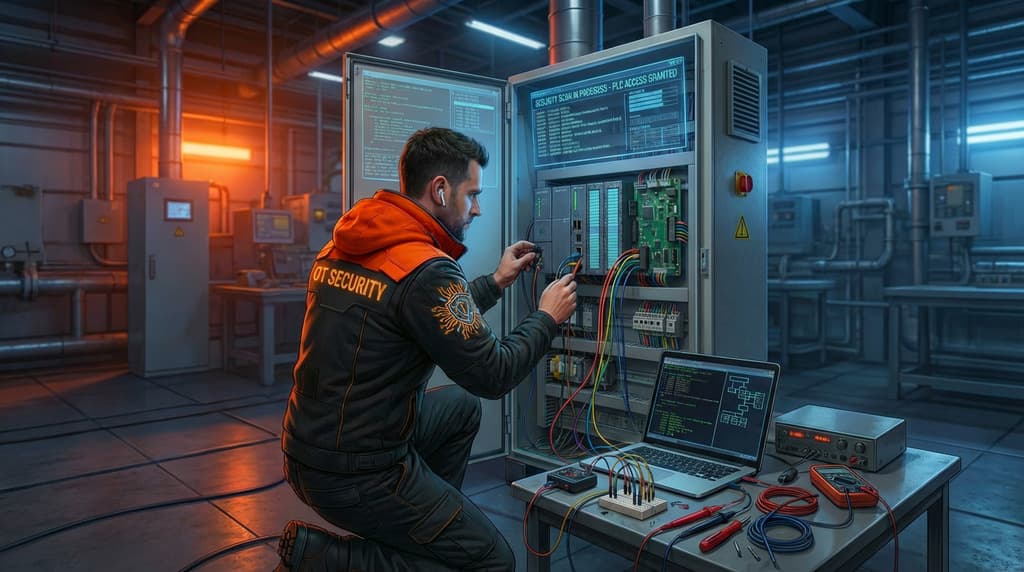
In operational technology (OT) environments such as: factories, plants, utilities, and critical infrastructure, availability is not just a technical metric. It is the foundation of safe, reliable, and efficient operations. When a production line stops, a water treatment plant halts, or a power grid goes down, the consequences are immediate and tangible: safety risks, lost output, and real-world disruption. For those of us who have worked on the plant floor, the message is clear: availability is everything.
In operational technology (OT) environments, such as factories, plants, utilities, and critical infrastructure, availability is not just a technical metric. It is the foundation of safe, reliable, and efficient operations. When a production line stops, a water treatment plant halts, or a power grid goes down, the consequences are immediate and tangible: safety risks, lost output, and real-world disruption. For those of us who have worked on the plant floor, the message is clear: availability is everything.
Why Availability is Paramount in OT
Unlike IT, where data confidentiality often takes center stage, OT is about keeping physical processes running. Downtime can mean more than lost revenue, this can endanger people, damage equipment, and disrupt communities. In many industries, regulatory requirements and safety standards are built around the assumption that systems must be available and reliable at all times. This is why plant managers and engineers are rightfully cautious about any change that could threaten uptime.
Stability and Long Lifecycles: The OT Reality
OT systems are designed for stability and longevity. It is common to find equipment in service for 20 years or more, running on legacy protocols and hardware. Change is approached carefully, with rigorous testing and planning. This operational conservatism is not resistance to progress, it is a rational response to the risks of disrupting complex, interdependent processes. Any security approach must respect this reality.
The Misconception: Security Threatens Availability
A common concern in OT is that security measures: patching, network segmentation, or access controls, will introduce instability or cause downtime. This fear is not unfounded; poorly planned changes can indeed disrupt operations. However, the greater risk is often the absence of security. Unpatched systems, flat networks, and weak authentication leave OT environments exposed to threats that can halt production far more effectively than a scheduled update ever could.
Lack of Security Undermines Availability
Real-world incidents have shown that cyberattacks, malware, and even accidental misconfigurations can bring industrial operations to a standstill. For example, ransomware that locks out control systems, or a worm that propagates through an unsegmented network, can cause unplanned outages lasting days. In these cases, the absence of basic security controls directly undermines the very availability that OT teams strive to protect.
OT Security: Supporting Availability, Not Hindering It
- Prioritizing risk assessments to identify what truly matters for uptime
- Using network segmentation to contain incidents without affecting critical processes
- Planning updates and changes in coordination with operations
- Focusing on monitoring and detection to catch issues early, before they escalate
- Training staff to recognize and respond to threats in a way that fits their environment
Security should be a partner to operations, not an obstacle.
Conclusion: Security as a Prerequisite for Reliable Operations
In OT, availability is the non-negotiable priority. But in today’s connected world, true availability cannot be achieved without security. The goal is not to add complexity or bureaucracy, but to ensure that the systems we rely on remain safe, stable, and resilient. By aligning security with operational realities, we make reliability possible (not just today), but for the long term.