Date: 11/25/2025
Cybersecurity
Zero Trust in Small and Medium Businesses
Learn how the Zero Trust model can protect your SMB against cyber threats. Discover how to implement an effective strategy and secure your data.
TL;DR
The Zero Trust model is a powerful security strategy that ensures no access attempt is trusted without verification. For SMBs, this model provides essential protection against both internal and external cyber threats.
What is the Zero Trust model?
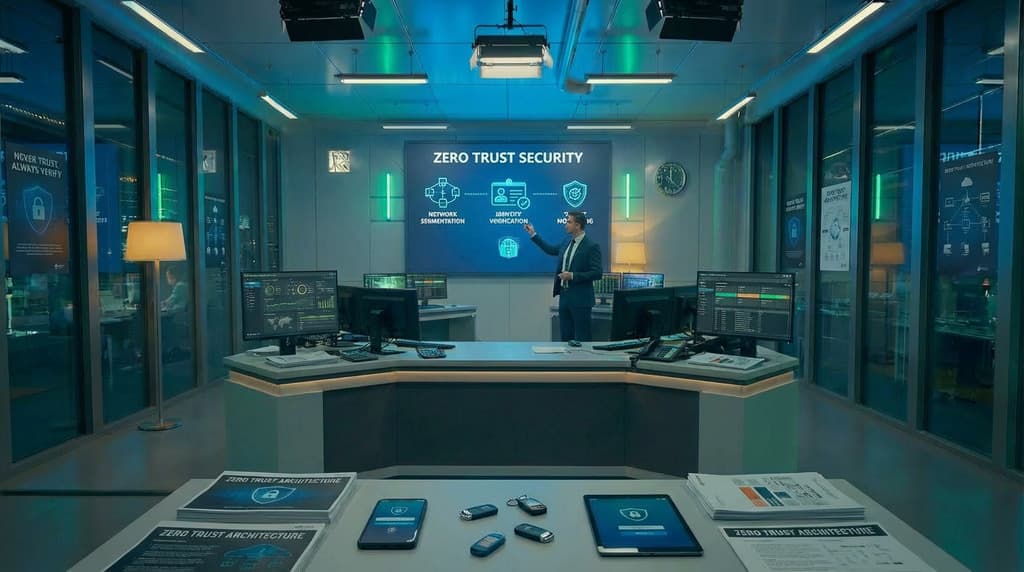
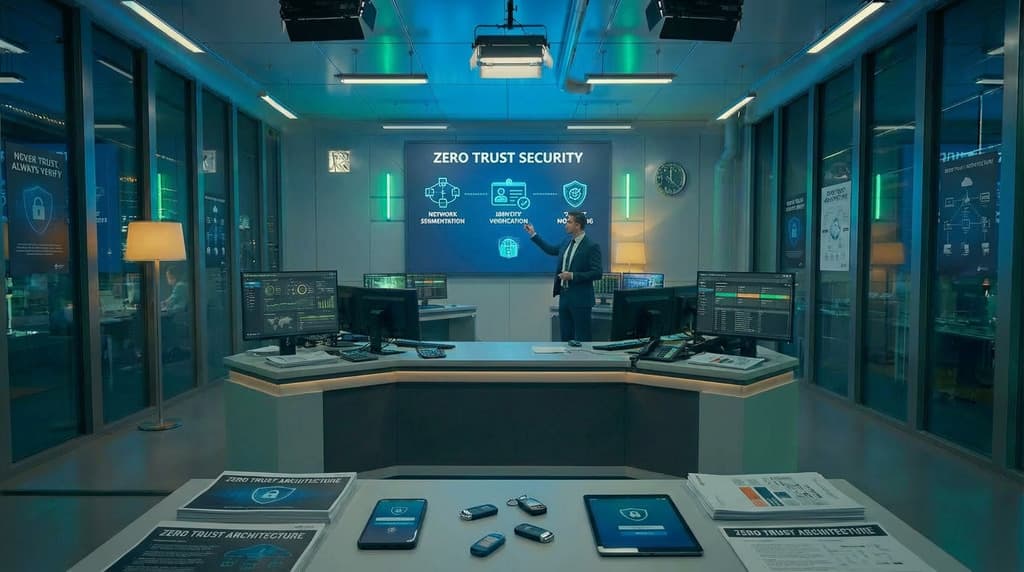
The Zero Trust model is a security strategy that assumes threats can originate both inside and outside the network. Therefore, every access attempt is strictly verified, regardless of its origin. This contrasts with traditional security models that focus on protecting the network perimeter. Instead of relying on a single line of defense, Zero Trust implements multiple layers of security to prevent unauthorized access.
Why is Zero Trust important for SMBs?
- Protection of sensitive data: By enforcing strict access controls, the risk of data breaches is reduced.
- Minimization of internal threats: Even employees do not automatically have access to all company information; access is granted based on necessity.
- Compliance with regulations: Zero Trust helps meet legal requirements for data protection and privacy.
How to implement Zero Trust in your SMB?
- Identify critical assets: Determine which data and systems are essential to your operations and prioritize their protection.
- Verify identities: Implement strong authentication methods, such as Multi-Factor Authentication (MFA), to ensure user identity.
- Limit access rights: Follow the principle of least privilege; only grant employees access to the information necessary for their role.
- Monitor and log activities: Continuously monitor network activities to detect and address suspicious behavior promptly.
- Segment the network: Divide the network into smaller segments to limit the spread of potential attacks.
Example: How a client was helped
| Situation: A small IT company faced unauthorized access to its internal systems. |
| Approach: CyberBusters advised the company to implement Multi-Factor Authentication (MFA) using YubiKey, apply network access controls, and introduce network segmentation. Additionally, a continuous monitoring solution was deployed. |
| Result: The company successfully strengthened its security and prevented future incidents, resulting in increased customer trust. |
Challenges and solutions
Implementing a Zero Trust model can be challenging, especially for smaller businesses with limited resources. It is crucial to take a step-by-step approach and prioritize the most critical parts of your infrastructure. Engaging external experts, such as CyberBusters, can help develop and execute an effective Zero Trust strategy tailored to your company's specific needs.
Conclusion
In an era where cyber threats are constantly evolving, the Zero Trust model provides a robust approach to enhancing security within SMBs. By implementing strict verification processes and access controls, companies can improve their resilience to attacks and safeguard the integrity of their data.